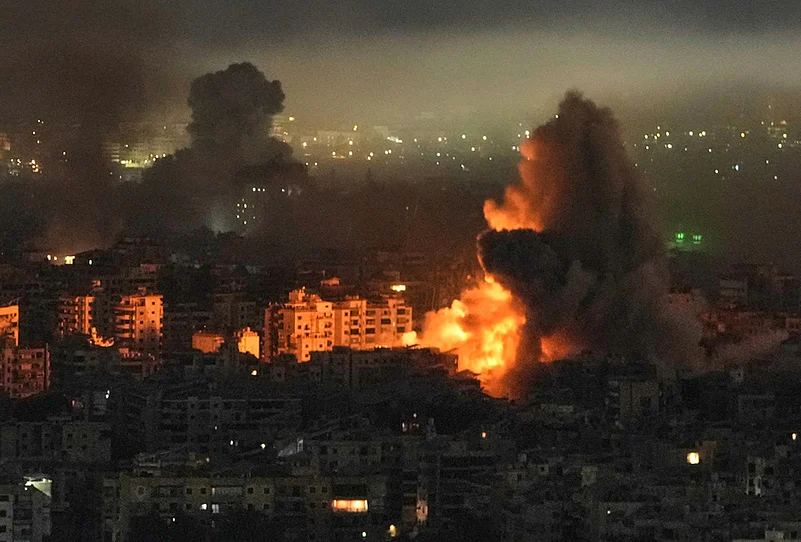

While the strife impacting West Asia has gone on since October 2023 when Israeli forces staged an offensive in Gaza, the issue has been exacerbated further by the United States’ attack on Iran on 28th February of this year.
As a result, a number of industries have been forced to pay the price for the conflict in numerous ways, and tourism is one of those hit hardest by the impact.
According to the World Travel & Tourism Council (WTTC), the global travel industry is losing an average of US$600 million per day and has been doing so since the end of February.
In a report published on 11th March, the WTTC added that, as West Asia\ plays a vital role in global travel, any disruption affects demand worldwide affecting everything from airports and flights to hotels, car hire companies and cruise lines.
It pays to remember at this point that West Asia makes up five percent of all global international arrivals, as well as 14 percent of global international transit traffic.
An exceedingly fragile sector
If we are to go by a report from the World Economic Forum released just last week on 29th September, the issues encountered by global commercial aviation in terms of airspace closures and the escalating price of jet fuel are just the tip of the iceberg.
The ongoing conflict in West Asia exposed just how much global mobility depends on the region’s access corridors.
Indeed, these networked corridors are crucial to a global industry that contributed around US$11.6 trillion to the global gross domestic product (GDP) whilst supporting 357 million jobs over the past year.
The WEF report likewise opined:
“Tourism also supports activity across transport, retail, finance, culture, food systems, infrastructure and local services. Yet, it is still too often treated as a stand-alone sector rather than as an ecosystem with infrastructure-like consequences.”
A report featured via LinkedIn News back in May adds a note on how badly the crisis is hitting global hospitality: “The ripple effects are visible across hospitality, with restaurants facing closures and input cost inflation, even as domestic travel helps sustain occupancy levels.”
Even power players are affected
Interestingly, countries directly affected by the conflict aren’t the only ones feeling the impact.
Nations with stakes in the conflict like the United States are also confronting the repercussions on their own tourism sectors.
As the WEF report puts it, disruptions do hit stakeholder nations without any actual violence affecting inbound tourists or local transport infrastructure.
Per the report:
“In 2025, Canadian visits to the United States fell by roughly 25 percent, costing the US economy more than US$8 billion in visitor spending… The decline reflected diplomatic tensions and political rhetoric rather than a broad change in global travel: International travel continued to expand, with an additional 80 million people travelling abroad worldwide.”
At the same time, Tourism Economics estimates that the decline represents an opportunity cost of approximately US$25 billion; this is relative to the growth the United States might otherwise have expected.
The way forward
Interestingly, despite the conflict, UN Tourism reported on Monday, 5th October, that the global tourism sector still registered positive 0.4 percent growth in the first half of this year.
According to the report: “While global arrivals increased by two percent in the first quarter [of] 2026, they then slipped by one percent in the second quarter, following a three-percent decline in April due to the calendar effect of Easter starting in March this year and the wider consequences of the Middle East conflict.”
UN Tourism’s forecast likewise remains mildly optimistic: international tourist arrivals to rise between one and two percent towards the end of the year.
This is somewhat lower than the three to four percent growth projected back in January, and may still be dependent on how long the conflict stands to last, along with its impact on global oil prices and inflation.