
If you’re planning a trip to Italy this summer, chances are it’s places like Rome, Milan, and Venice you’ll be hitting up. Yeah, they’re super tourist, and yeah, you already know “crowded” is putting it mildly, so no judgment here.
There’s nothing quite like wandering Rome’s open-air museum of a Historic Center or grabbing an aperitivo with killer lagoon views from a Venice rooftop, but hey, there’s always room for more.
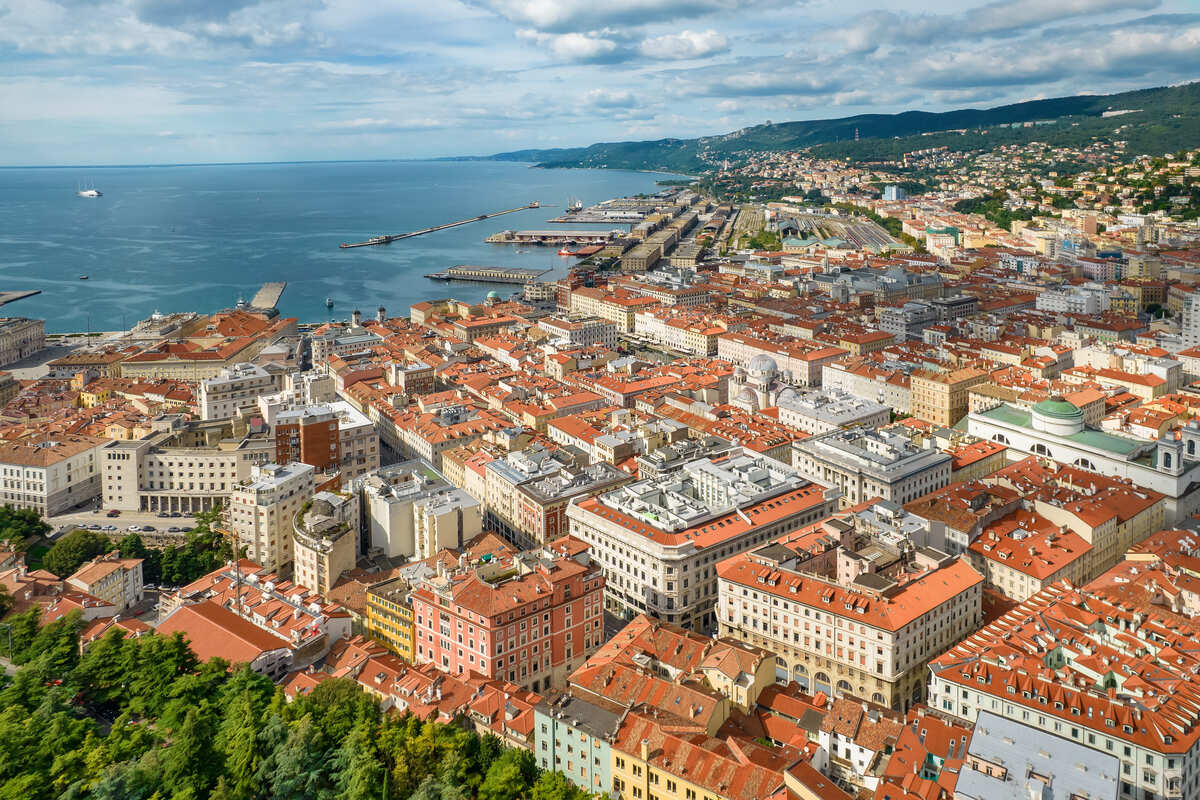
Tucked away in the lesser-explored northeastern region of Friuli-Venezia Giulia, Trieste is that perfect hidden gem to balance your packed Italy itinerary, and 2026 might be your last shot to visit before it gets just as packed as everywhere else:
Last year, the capital and cultural heart of Italy’s easternmost fringe officially surpassed 1.6 million visitors, marking one of its strongest tourism years yet, and there’s no sign of the momentum slowing anytime soon.
Now, 1.6 million is barely a ripple in the vast ocean that is Italy’s tourism industry, but for otherwise quiet, historically overlooked Trieste, long considered the country’s final outpost before you enter Slavic territory, it’s a major surge. Especially for a city of just under 200,000 residents.
And no, this isn’t simply the result of Veneto day-trippers hopping on a train north for Carnival celebrations or a spontaneous Easter weekend away.
It points to genuine, year-round demand, with Maurizio Giudici, president of local hotel association Federalberghi Trieste, noting that tourism in the city “is no longer a marginal phenomenon.”
Is This Italy Or Austria?
Well, can it be both?
We’ve already hinted at it, but if you’re inspired to go off the beaten path this season and see what Trieste is all about, you’ll quickly realize this is not the Italy you know from social media.
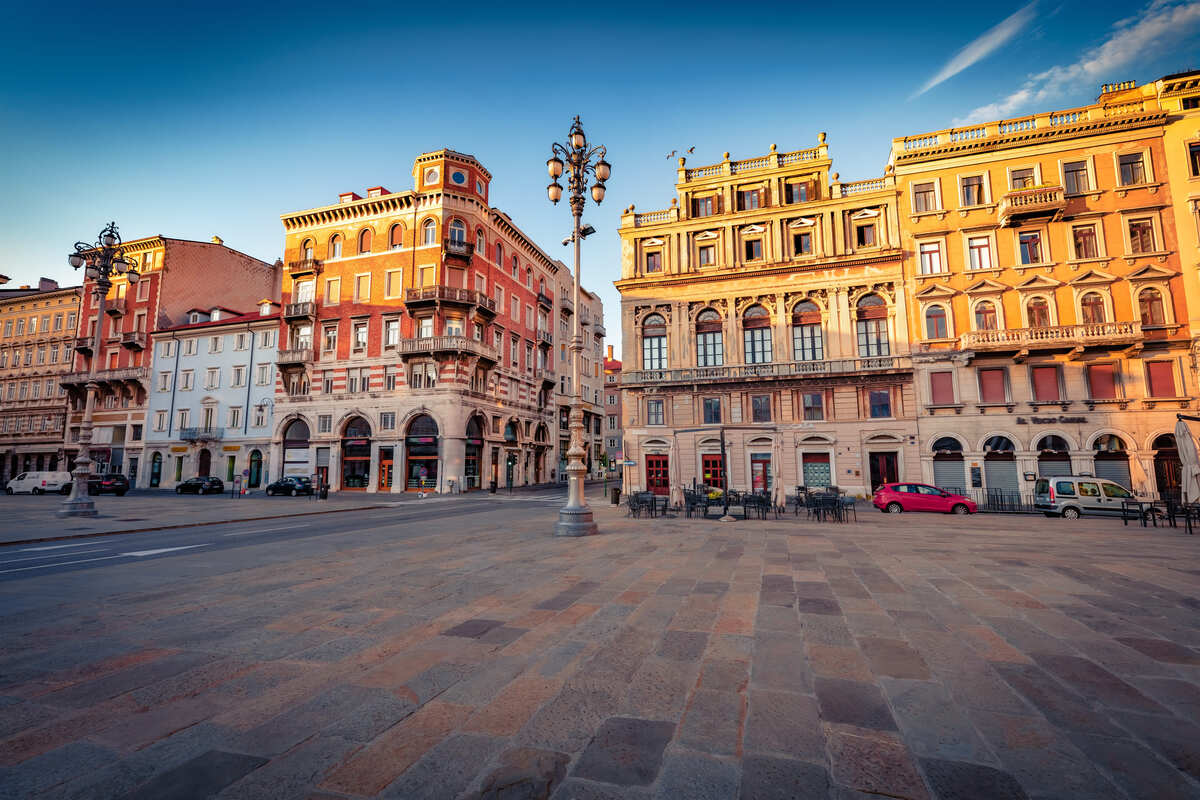
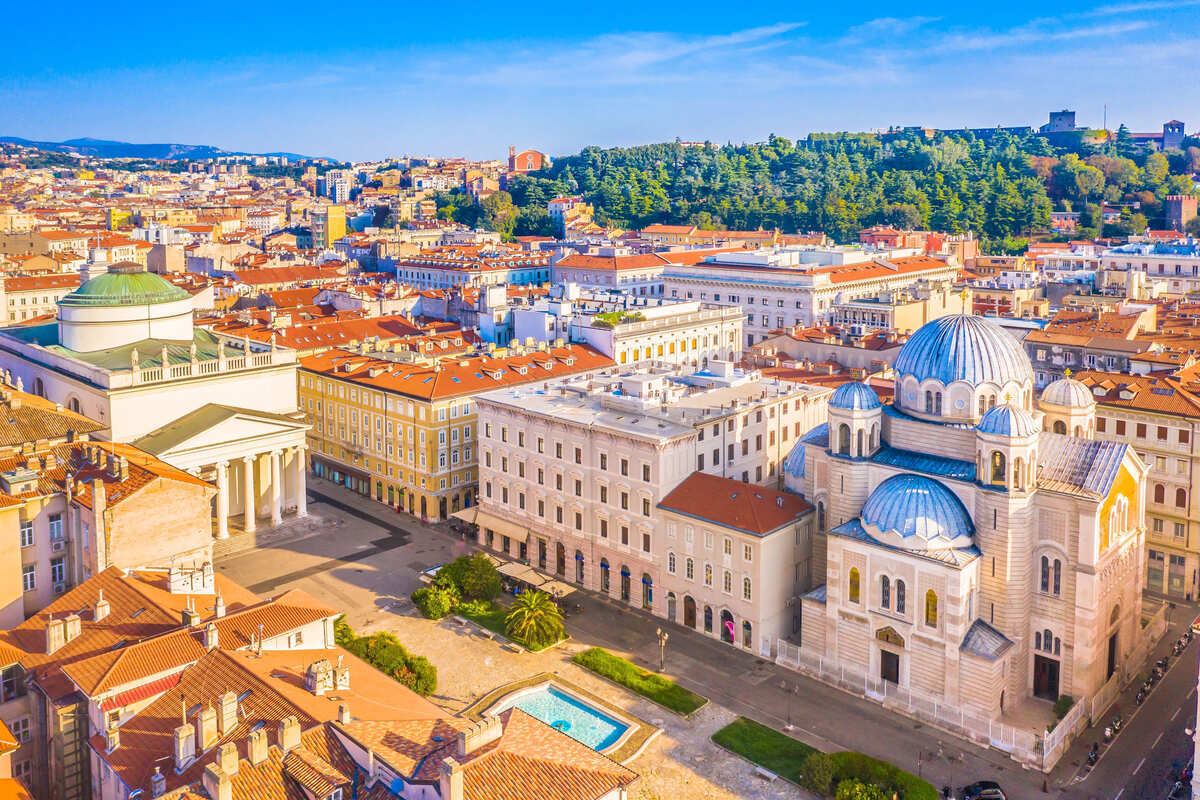
Instead of chaotic Vespa traffic and markets spilling onto busy thoroughfares, it’s stately Austro-Hungarian boulevards lined with ornate niches and palatial civic buildings. In many ways, Trieste doesn’t look too far removed from Vienna or Budapest.
You may be wondering why. At one point in history, the city wasn’t ruled from Rome, but by the Habsburgs, an empire stretching from the Austrian Alps all the way to Hungary… and apparently reaching Trieste in its cozy little Adriatic corner.
There’s nowhere better to let that Central European atmosphere sink in than, ironically, Piazza Unità d’Italia, or “Union Square”, a grand plaza commemorating the unification of Italy, and thus Trieste’s shift in allegiance, yet still unmistakably Austrian in character.
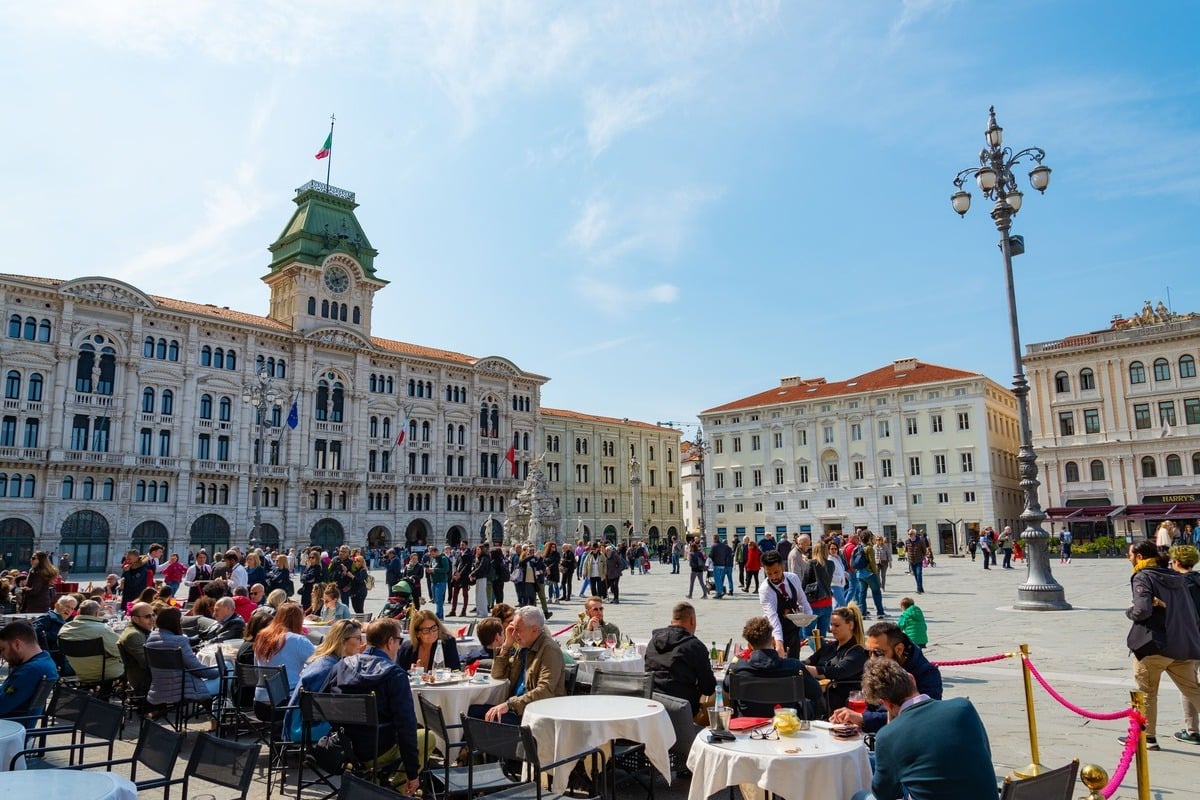
It’s monumental in scale, basically a wide open space designed to project imperial grandeur, and the façades that surround it are typical eclectic Austrian, rather than medieval Italian or Renaissance.
The coolest part? Unlike your average main piazza, this one isn’t centered around a cathedral. Instead, it opens dramatically onto the Adriatic. Trieste was an imperial maritime city at one point, after all, and it’s deeply sea-oriented.
Check Your Entry Requirements Before Flying
Heading to Europe this summer?
You should know that entry regulations have changed significantly for U.S. passport holders. From mandatory fingerprinting upon arrival, to the pending introduction of a mandatory online visa, there’s a bunch of new rules in place you must familiarize with ahead of heading to the airport.
Check the latest Entry Requirements here.
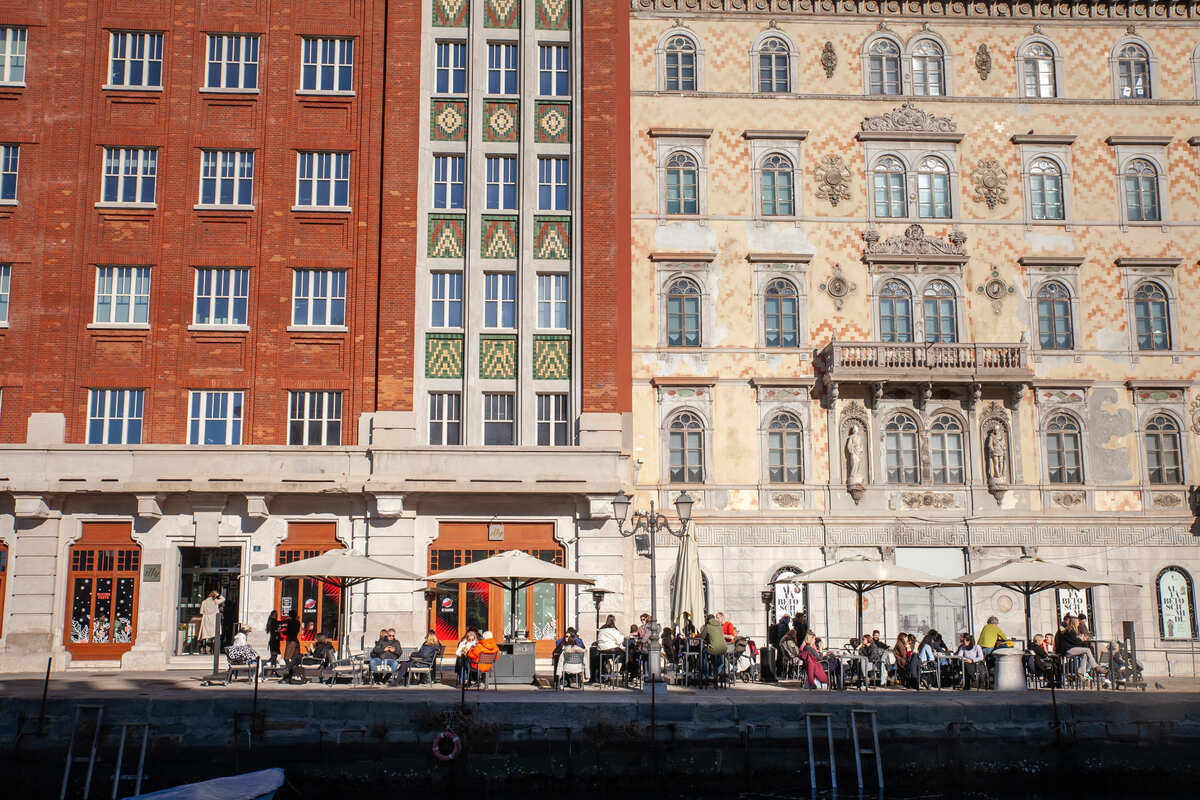
You haven’t been to Trieste until you’ve sat down for a cappuccino and a cheeky brioche before breakfast wraps up at 10 a.m.
Caffè San Marco is that one tourist-trap fancy café in town that’s actually worth the hype, or a slight splurge.
Opened in 1914 right before WWI, it’s been hosting intellectuals, writers, and revolutionaries in its warm-wood, brass interior ever since. This Vienna Secession-style spot drew James Joyce, Italo Svevo, and Umberto Saba as regulars, and it still pulls in locals alongside visitors for that literary vibe.
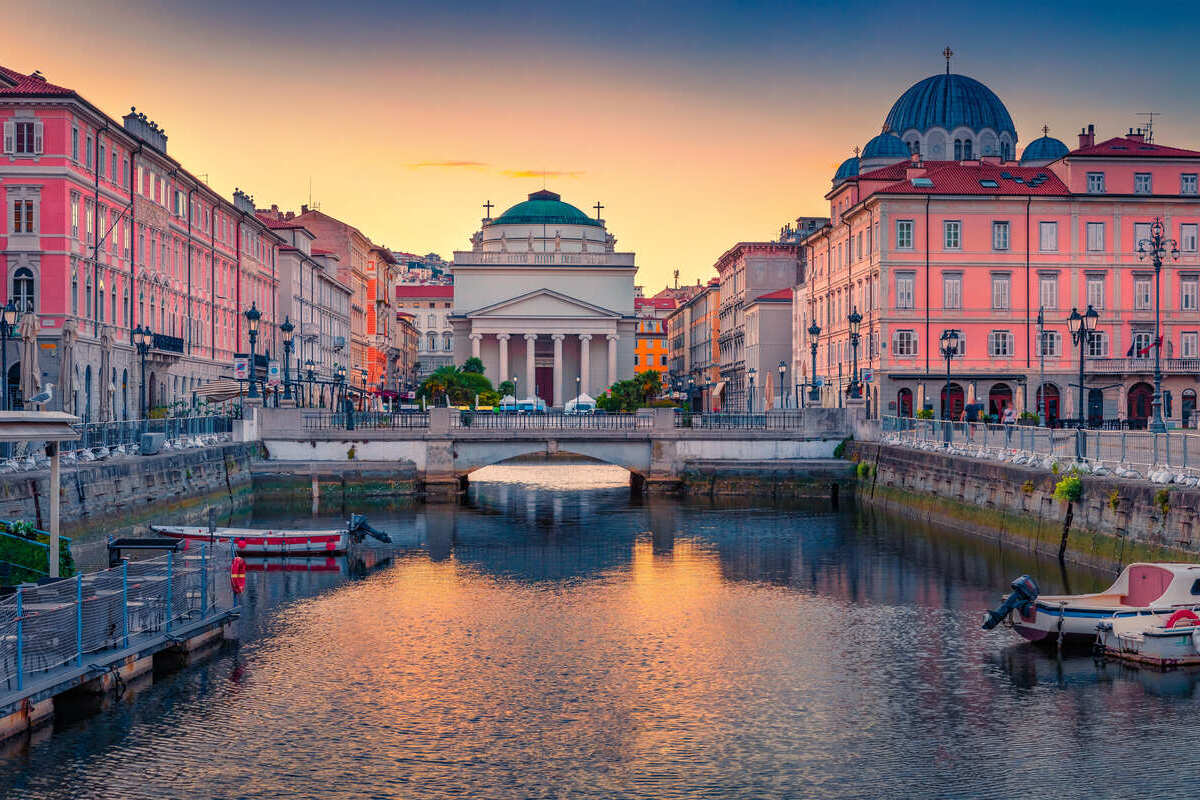
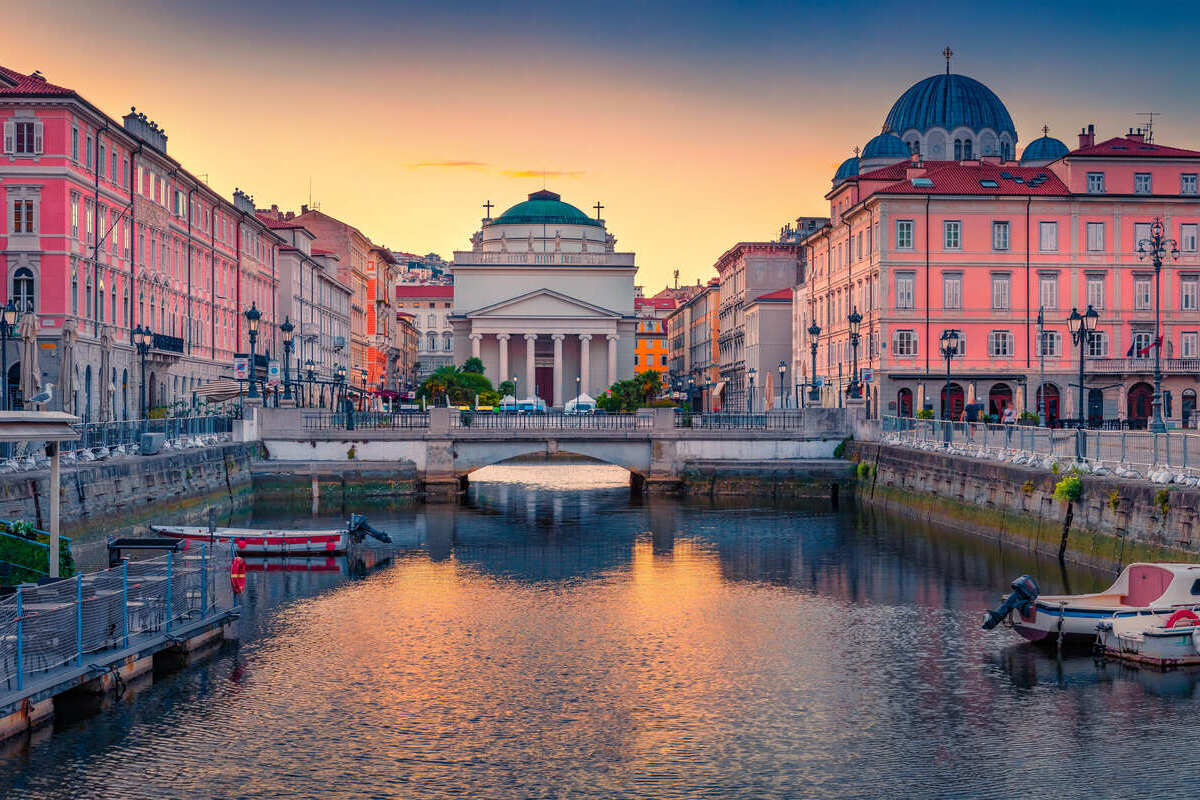
Nearby, the Canal Grande is the Venice look-alike area of town: a small navigable waterway spanned by stone bridges and lined with laid-back trattorie tucked behind Austrian arcades. Molo Audace, the long pier extending into the Adriatic, is perfect for sunset walks and sea-gazing.
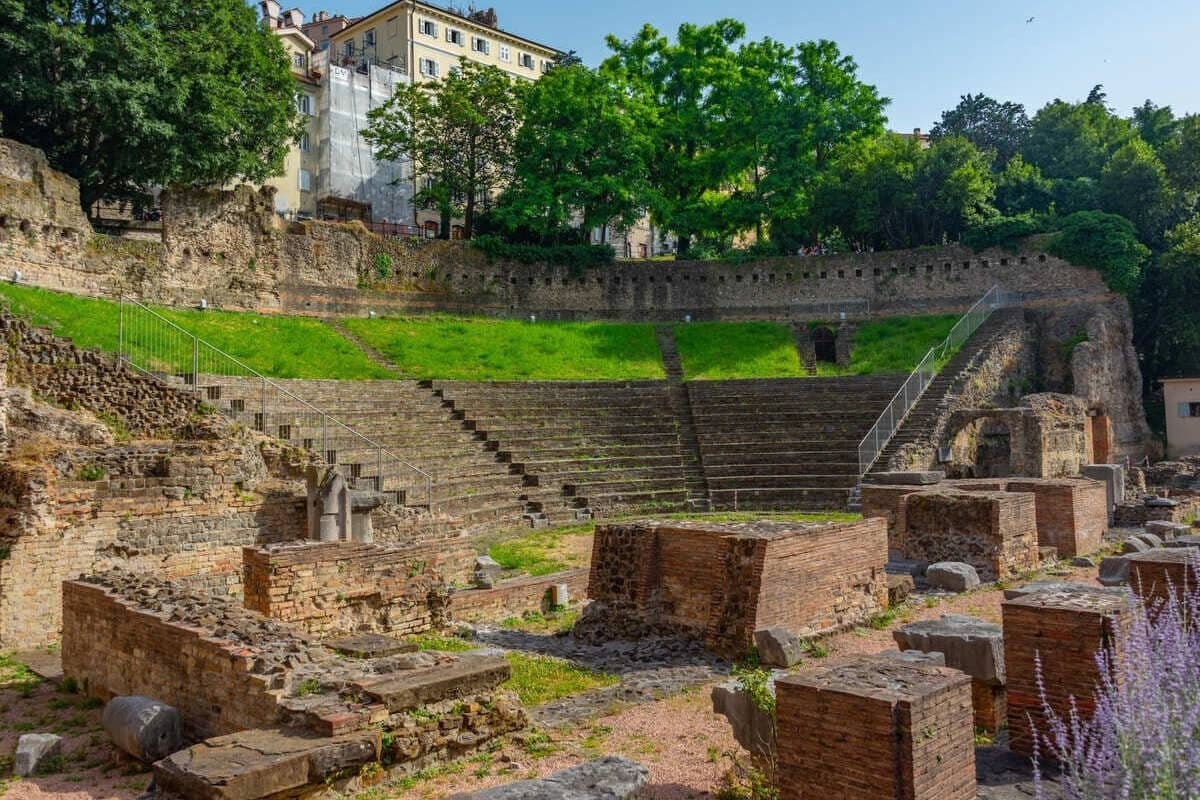
Not an awful lot of Trieste’s glorious Roman past still stands, but as someone who’s obsessed with the Roman Empire myself, I can’t help but be drawn to the odd few remnants that have stood the test of time.
The most impressive of all has to be Arco di Riccardo, nestled in the maze-like Old Town. It dates back to the 1st century BC, making it over 2,100 years old, and it’s sort of squeezed between modern buildings—almost like the city grew around its Roman heritage rather than burying it altogether.
A 5-minute walk from the arch, the Roman Theater of Tergeste is striking in its simplicity. Once sea-facing, before the Adriatic retreated miles away, it remained concealed under medieval buildings until its relatively recent rediscovery in the 1930s.
Up the hill that overlooks downtown Trieste, Castello di San Giusto is a historic fortress offering panoramic views of the city and its gulf.
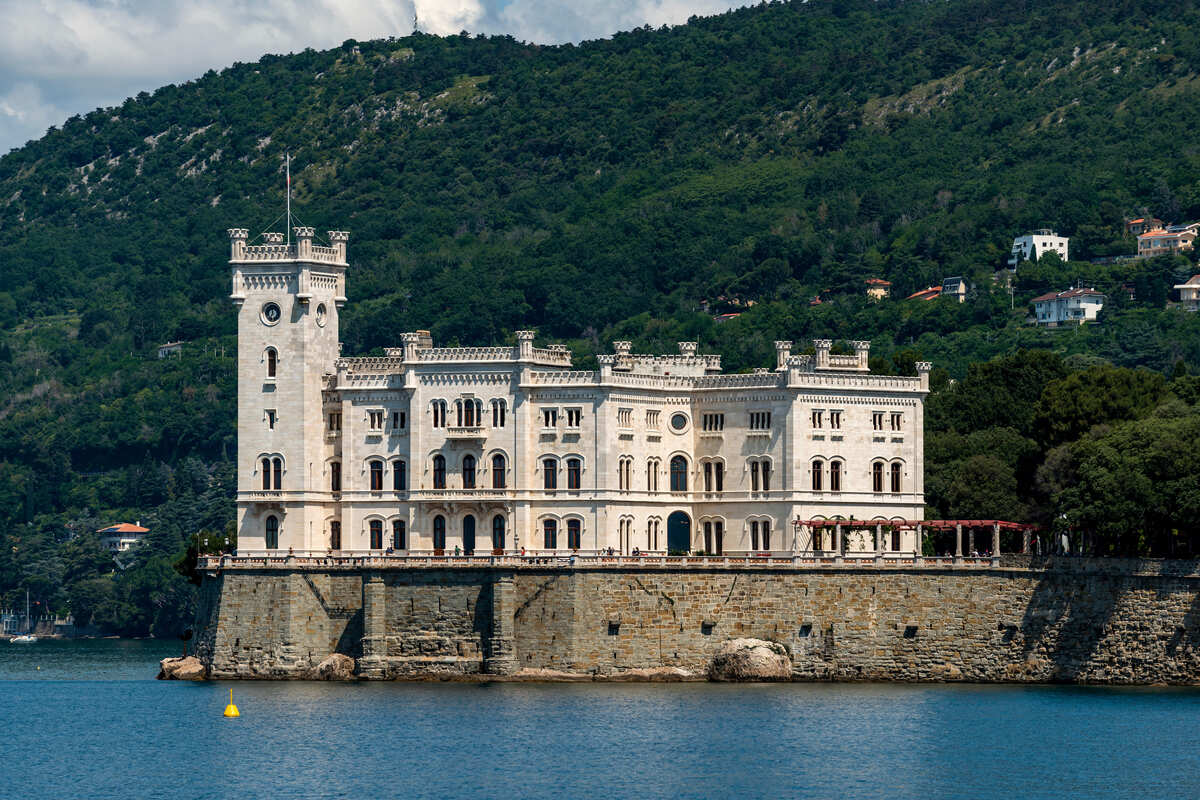
If you don’t mind a little day trip out, and you lose your heart over a fairytale castle, Castello di Miramare is a stunning Habsburg palace with Como-like gardens and epic sea views. Only a half-hour bus ride out of town!
Alternatively, for those keen on a cross-border hop into Slovenia, as it’s literally “right over there”, another 30-minute shuttle will take you to Koper, a postcard-ready Slovene Riviera town. It’s the proud home of Da Ponte Fountain, crowned with a miniature-scale replica of Venice’s Rialto Bridge.
Whether you’re spending time coffee-sipping in Trieste, or wandering along the waterfront promenades in Koper, you’re probably wondering whether there are any travel alerts in place for these destinations with the ongoing war in Europe.
The simplest, most straightforward way to verify whether risk levels or entry guidance has changed is referring to the Travel Advisories page, informed by reports issued by local U.S. consulates and the U.S. Department of State.
Regarding Italy specifically? It’s currently classed as a Level 2 destination, which means Americans must simply exercise ‘increased caution’ when visiting due to pickpocketing and other minor inconveniences.
What travelers themselves have been saying, though? Take a look below:
Trieste’s Coup de Coeur
Now, Trieste cuisine is not your typical sun-drenched, tomato-soaked Italian fanfare. It’s primarily known for its cabbage soup, goulash, boiled meats, and sandwiches stuffed with hot meat. We’re only a 20-minute drive into Slovenia, after all.
Buffet da Pepi is a classic Trieste institution only a few steps from Arco di Riccardo. Opened in the Austro-Hungarian era, it has that local, no-frills, “this is what Triestini actually eat” vibe, and your collection of crumpled €5 notes, buried deep in your wallet, will probably cover the bill.
Speaking of price tags, Trieste is nowhere near as expensive as your average Italian hub.
This is a fairly compact, fully walkable city, but if you don’t fancy the free workout sesh going from the Old Town up to the San Giusto Hill, a one-way bus ticket, valid for about 75 minutes, costs €1.50 (about $1.60).
Hostels and budget rooms also start from as cheap as $22 a night, while 3-star hotels are commonly $75–$90. A luxury stay looks something like $200+ per night, which would be your average, far-from-stellar, 10-minute-drive-from-the-beach guesthouse down in Amalfi.
Ready to find more hidden gems around Italy beyond Trieste?
See Travel Off Path’s Italy ‘Uncovered’ 5 Lesser Known Destinations To Visit In 2026.