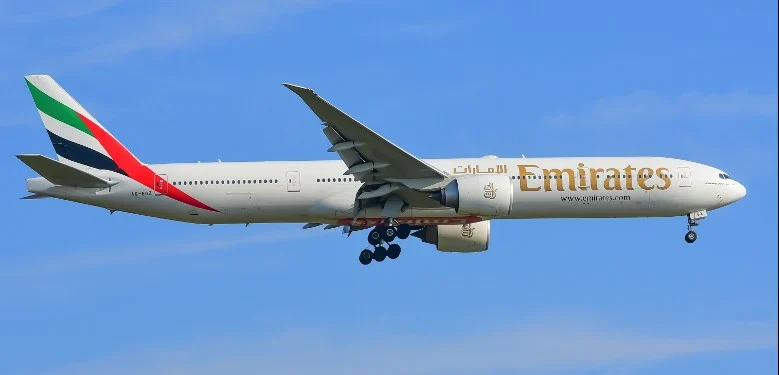

Not too long ago, Emirates introduced a joint interline settlement with Loong Air, a Zhejiang-based regional service. This covers key aspects of Emirates China regional airline partnership.
Some aviation lovers defined it this fashion: “For these unfamiliar, it’s like Sam’s Membership partnering with a small native grocery store.”
Behind Emirates’ choice to staff up with Loong Air lies a strategic pivot within the Chinese language market.
Competitors at China’s 4 main hubs—Beijing, Shanghai, Guangzhou, and Shenzhen—has already reached saturation. Emirates operates both one or two each day flights on these routes, leaving restricted room for incremental progress. Reaching second-tier cities equivalent to Zhengzhou or Changchun by way of self-operated routes could be expensive. As a substitute of burning capital on trial routes, Emirates is selecting to “take a look at the waters” through Loong Air’s home community.
In contrast with code-sharing, the interline mannequin is considerably lighter—it requires no system overhaul, no service standardization, and solely sales-side integration, making it the lowest-cost solution to penetrate the market.
Final yr, Emirates launched a each day Dubai–Hangzhou service, marking Hangzhou the airline’s first mainland Chinese language vacation spot served by its Airbus A350. Exploring Emirates China regional airline partnership reveals important insights. Emirates now operates 49 weekly flights between Beijing, Shanghai, Guangzhou, Shenzhen, and Hangzhou.
By partnering with a neighborhood base service, Emirates can create a closed loop at Hangzhou: Emirates handles internationally sectors, whereas Loong Air offers home connectivity.
Information exhibits that in 2025, Hangzhou airport dealt with 238,000 worldwide switch passengers, with worldwide switch routes rising to 30. These passengers characterize an current pool of demand that Emirates can faucet into.
Hangzhou is only one a part of Emirates’ broader China technique. Via partnerships with Air China, China Southern, Sichuan Airways, and Loong Air, Emirates’ now extends to over 110 locations throughout mainland China.
As Qatar Airways and Etihad proceed to compete aggressively for Chinese language vacationers, this “broad-net” method to native partnerships additionally features as a defensive technique.