
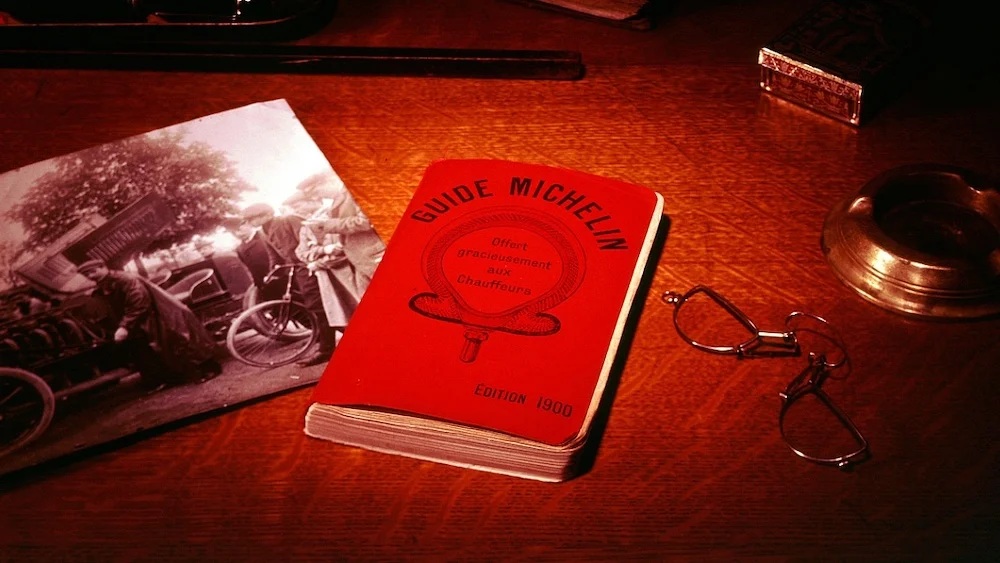

It’s that time of year again as the Michelin Guide is poised to either announce the establishments that have made it into its revered annals for 2027 or has already awarded the worthy institutions throughout Asia and the rest of the world.
Back in January, we reported on how the Guide has made tourism boards focus on gastronomic tourism as a driving factor for growth, something which prompted destination marketing agency Imagine CEO Rebecca Barnes to say:“Culinary tourism isn’t just a trend: it’s a serious economic driver. And nothing validates a destination’s food scene like a Michelin Star.”
But while Michelin Stars and their hospitality counterpart the Michelin Key have been instrumental in driving tourist traffic into destinations, we wonder about the flip side.
Could these same restaurant and hotel ratings also have a negative impact on destinations?
Michelin as a pitfall rather than a pro
On 31st August of this year, The Guardian UK’s George Francis Lee wrote a rather brutal look at the Guide, pointing out how chefs fear that it has lost credibility over the years.
As Lee put it: “The book’s rankings are decided by famously tight-lipped, expert reviewers employed by Michelin, who dine with fake names to maintain confidentiality and honest critique. Michelin says the incognito critics judge food on consistency, flavour, quality of ingredients, culinary technique, and chef personality. But with a growing list of starred restaurants in the UK and Ireland guide alone, some wonder if there are enough inspectors to repeatedly visit restaurants and ensure high standards are maintained.”
Indeed, the Guide has come under flak both on and offline by what is perceived as a pay to play system which essentially relies on tourism boards and governments paying millions of dollars to bring inspectors to their region.
So much so, in fact, that restaurant reviewer Andy Hayler was moved to declare:
“For many years now, [Michelin Guides] outside Europe have been funded by tourist boards. I’m speaking hypothetically here, but if a tourist authority pays millions for a guide, it inevitably creates pressure. Inspectors aren’t going to return and say, ‘Sorry, none of your restaurants are good enough.’ That doesn’t mean the restaurants are bad, but it does compromise independence, in my view.”
To put it bluntly, this dynamic shifts state-level tourism funding away from broad community infrastructure and redirects it toward marketing a handful of elite establishments.
The worst part of it is that smaller, highly-deserving destinations that lack the budget to court these guides are effectively erased from the global luxury tourism map.
Do Michelin appellations drive overtourism and exclude the common man?
Unfortunately, the simple answer to that over the past few years has been yes.
A study conducted by the faculty of the Department of Tourism Management at Taiwan’s Chinese Culture University in 2020 pointed out that an almost overnight influx of affluent international “culinary tourists” tends to surge into a destination whenever a local establishment receives a star or Bib Gourmand rating.
Indeed, authors Chiang Chun-Fang and Guo Hung-wen opined that this leads to a disastrous domino effect, saying:
“After a restaurant is awarded a Michelin Star, the number of visitors wishing to visit the establishment increases substantially. This makes it difficult to secure a reservation. Naturally, consumers develop higher expectations concerning that restaurant’s standards. To enhance quality, many restaurants use high-quality ingredients, which increases the price of their cuisine. [Experts suggest] that restaurants that were once moderately frequented and had a small seating capacity become fully booked once they obtain a Michelin Star. Even frequent customers may have to make reservations six months to a year in advance, which results in customer complaints.”
Peter Cruiming, an administrator for the social media group for Hotspots Algarve, seconds this, as he has seen how Michelin stars tend to drive up menu prices, thus pandering only to elite customers whilst excluding ordinary people with average budgets.
Experts on urban planning and tourism research also warn about a trend spurred on by Michelin recognition: foodification
Foodification occurs whenever historic centres or local communities transform their retail spaces to cater almost exclusively to food tourists.
Traditional local shops, neighborhood services, and affordable housing frequently get displaced by high-end dining spots, luxury hotels, and tourist-facing venues, again displacing local communities and putting grassroots MSMEs at a disadvantage within affected areas.
The human cost of stars
If you have read the late Anthony Bourdain’s classic Kitchen Confidential, then you will have a good idea on how much pressure chefs and other culinary workers are under. Every afternoon’s and evening’s service has its regular range of stresses which include whether or not the restaurant has enough supplies, problematic diners, and service quality in both the front and back of the house.
If you throw in gunning for a Michelin nod, then you amplify these existing stresses and create an incredibly toxic, high-pressure working environment.
Behavioural analysts point out that anticipating the constant scrutiny of anonymous inspectors has often led to severe chef burnout, high staff turnover, and fomented an industry climate focused entirely on perfectionism rather than hospitality or local cultural expression.
Thanks to such circumstances, the workplace becomes a pressure cooker that appears to seek the approval of a single foreign publication, and the actual spirit of local hospitality suffers.
As Cruiming puts it: “Michelin stars put immense pressure on chefs and restaurateurs. They are judged on a scale of one to three stars, which means even a single star can be seen as a failure. This constant pressure to strive for perfection can lead to stress, burnout, and even the loss of passion for cooking.”
Something to think about
On a positive note, tourism defenders argue that the Michelin Guide serves as a tool for geographic decentralisation.
Because dining can draw visitors away from standard monuments and into lesser-known outer neighborhoods or regional towns, it can theoretically spread out tourist foot traffic.
But consider this: over the years, Michelin branding collapses distinct achievements into a single idea in the public eye.
Casual tourists often crowd into standard recommendations or Bib Gourmand venues, such as street food stalls in Bangkok or Singapore, treating them like three-star destinations, essentially cheating locals out of a good meal.
In which case, perhaps the time has come to rethink the Guide and whether its standards are still a boon or have become the bane of global hospitality.