
India’s extension of free 30-day, double-entry e-Tourist visas for Thai nationals until December 2027 gives tour operators, DMCs and hotels a longer window to build business from a Southeast Asian market where Buddhist pilgrimage remains the strongest draw.
India has extended its visa-fee waiver for Thai tourists until December 31, 2027, giving the inbound travel trade greater certainty to develop a market that sent more than 140,000 visitors to the country in 2024. Under the measure announced by the Embassy of India in Bangkok, Thai passport holders can obtain a 30-day, double-entry e-Tourist visa without paying the visa fee. Travellers must still apply for the visa before departure.
For India’s inbound operators, the longer policy window allows DMCs and wholesalers to contract programmes further ahead, while hotels across the Buddhist pilgrimage belt have an opportunity to lock in group business from one of Southeast Asia’s established religious travel markets.

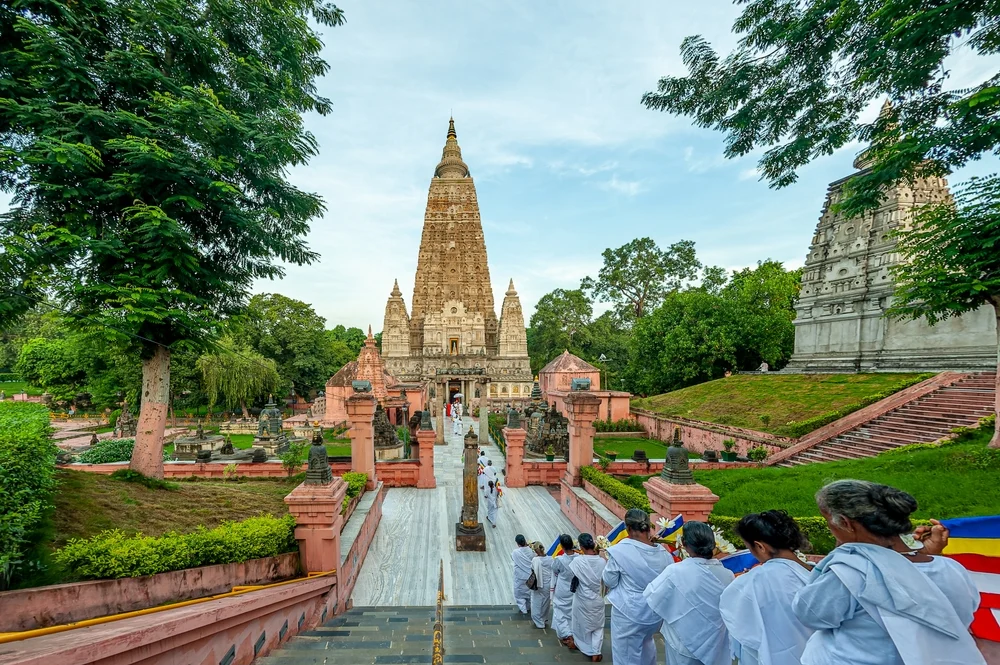
The walkway in front of The Great Buddha Statue in Bodh Gaya.
Thai arrivals climb back towards pre-pandemic levels
Thailand ranked among India’s top 15 source markets in 2024. Ministry of Tourism figures published by the Press Information Bureau show that India received 140,489 visitors from Thailand in 2024, up from 116,060 in 2023 and 54,367 in 2022. The recovery is substantial, although the market has yet to regain its pre-pandemic scale. India recorded 169,956 arrivals from Thailand in 2019. A further 57,056 Thai visitors arrived between January and April 2025, according to government data.
Air access has also broadened, with Indian and Thai carriers connecting the two countries across several city pairs. That gives operators more flexibility to package shorter pilgrimage journeys as well as programmes combining religious sites with mainstream leisure destinations.

Bodh Gaya, West Bengal, India, The devotees and pilgrims of Lord Buddha are busy in prayer in the afternoon.
Buddhist Circuit remains the core product
For the Thai market, India’s Buddhist heritage remains the obvious starting point. Bodh Gaya, where Buddha attained enlightenment, anchors most pilgrimage programmes. Sarnath, where he delivered his first sermon, and Kushinagar, associated with his Mahaparinirvana, are natural additions. Rajgir, Nalanda, Vaishali and Shravasti allow specialist operators to build longer circuits rather than sell Bodh Gaya as a stand-alone destination.
The commercial opportunity is increasingly about what can be added around that journey. Varanasi is well placed to capture extra nights from groups travelling to nearby Sarnath. Delhi and Agra can extend a pilgrimage itinerary into a broader first-time India programme, while Rajgir and Nalanda give Bihar operators scope to keep travellers within the state for longer.
Infrastructure has gradually caught up with that ambition. Improved air, rail and road connectivity serving Kushinagar, Bodh Gaya, Rajgir, Nalanda, Vaishali, Sarnath and Shravasti. Kushinagar International Airport was developed in part to improve access to the Buddhist Circuit. The double-entry provision is particularly useful for India-Nepal programmes. Pilgrimage groups can include Lumbini, Buddha’s birthplace in Nepal, before returning to India, giving DMCs greater flexibility in designing regional Buddhist circuits.

Parinirvana temple, Kushinagar, India. It is important Buddhist pilgrimage site, where Buddhists believe Gautama Buddha attained Parinirvana after his death
Hotels can capture more of the pilgrimage spend
For hotels in Bodh Gaya, Varanasi, Kushinagar and other pilgrimage centres, the opportunity goes beyond room nights. Thai-speaking assistance, vegetarian and familiar Asian food choices, early breakfasts, flexible meal schedules and arrangements for monks and religious groups can influence purchasing decisions. Hotels that work closely with Thai wholesalers and Indian ground handlers on these requirements are better positioned to compete for repeat series business.
There is also scope to widen the itinerary. Wellness, yoga, heritage, shopping and culinary experiences can be built around pilgrimage programmes, particularly for repeat visitors and accompanying family members.
Buddhist pilgrimage are an important component of Thai travel to India, reflecting cultural and religious links that have long supported tourism between the two countries. For the trade, the runway now extends through 2027. Buddhist Circuit operators have an opportunity to package more complete journeys, hotels can tailor their group proposition to Thai travellers, and DMCs can use pilgrimage as the anchor for longer itineraries that add destinations, room nights and spend.

Parinirvana temple, Kushinagar, India. It is important Buddhist pilgrimage site, where Buddhists believe Gautama Buddha attained Parinirvana after his death