
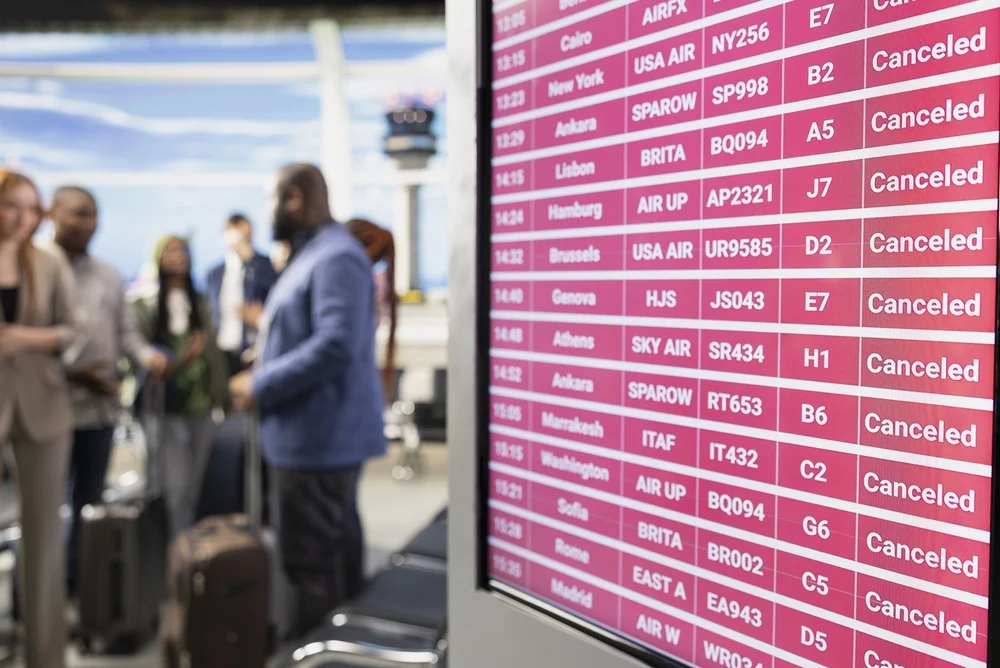

Geopolitical volatility, airspace threat, and oil value strain are reshaping Asian outbound journey in ways in which most vacation spot planning cycles are usually not constructed to soak up. Exploring Asian travel demand Middle East conflict reveals important insights. The COVID shock provided a rehearsal. The {industry} didn’t totally use it.
By Dr. Jens Thraenhart | CEO, Chameleon Methods; Founder, Saudi Outbound
Chameleon Methods | UN Tourism Affiliate Member
Throughout 20 years of working in tourism throughout Asia, the Center East, the Caribbean, and North America, I’ve watched the {industry} repeatedly mistake steady intervals for the baseline. The planning assumption, hardly ever said explicitly however embedded in each finances cycle and capability determination, is that the present situations will persist lengthy sufficient for the forecast to carry. They often don’t.
That commentary shouldn’t be pessimism. It’s the sample. And the sample is asserting itself with uncommon power throughout a number of strain factors concurrently: energetic battle disrupting the world’s most important aviation corridors, bilateral tensions reshaping connectivity throughout Asia, and intra-regional conflicts producing tourism injury by means of mechanisms that vacation spot planners hardly ever mannequin prematurely.
The Airspace Drawback: No Longer Theoretical
Iran’s airspace is a main routing hall connecting South Asia, Central Asia, and East Asia to Europe. IATA estimated that 10 % of all world worldwide Income Passenger Kilometers handed by means of Center East airports in 2025. That determine offers some sense of what’s at stake when the area destabilizes. Two escalation cycles in 2025 and one in early 2026 demonstrated it concretely.
In June 2025, Israel and Iran exchanged missile strikes. Iran, Iraq, and Jordan closed their airspace. Ben Gurion Airport shut fully. Emirates suspended flights to Tehran, Baghdad, and Basra by means of June 30. Etihad suspended Abu Dhabi-Tel Aviv by means of mid-July. Iran’s parliament voted to shut the Strait of Hormuz. A ceasefire agreed on June 24 paused hostilities, although EASA maintained its warning towards working in Iranian, Iraqi, Israeli, and Jordanian airspace and described the ceasefire as fragile.
The second cycle started February 28, 2026, when US and Israeli strikes on Iranian targets triggered Iranian missile and drone retaliation throughout the Gulf. Iran closed its airspace. Bahrain, Kuwait, Syria, and enormous sections of UAE and Qatari airspace closed concurrently. Dubai Airport suspended operations on March 7 after a drone struck close to Terminal 3. Qatar Airways started ferrying widebody plane to Teruel Airport in Spain for storage. Emirates operated at roughly 90 % of its pre-conflict ranges; Etihad dropped to roughly 15 % of regular Abu Dhabi capability. Cathay Pacific suspended Hong Kong-Riyadh. Virgin Atlantic withdrew London Heathrow-Dubai for the remainder of the winter season. With greater than 20,000 passengers stranded throughout UAE airports, the UAE Common Civil Aviation Authority introduced on March 1 that the state would bear all lodging and meal prices for affected vacationers. Qatar Tourism issued a parallel round to inns protecting roughly 8,000 stranded transit passengers. The UAE additionally issued greater than 15,000 momentary entry visas so transit passengers held in sterile zones may transfer into inns whereas awaiting onward connections. Each have been notable responses: disaster administration that absorbed the monetary burden that may in any other case have fallen on particular person vacationers and, equally, protected the long-term reputational place of each international locations as dependable transit and tourism hubs.
The oil price channel runs in parallel. The Strait of Hormuz handles roughly 20 % of world oil provide. Any credible closure risk pushes crude costs up, which transmits immediately into jet gas prices. IATA estimated jet gas averaged USD 86 to 87 per barrel in 2025, already accounting for 25 to 26 % of airline working prices at baseline. That share climbs additional underneath a value spike. The arithmetic converts shortly into surcharges on routes serving price-sensitive traveler segments, which describes a good portion of Asian outbound journey.
10%
International int’l RPKs by means of Center East airports, 2025
IATA, 2025 ~20%
International oil provide by means of Strait of Hormuz
U.S. EIA 25-26%
Jet gas share of airline working prices, 2025
IATA, Dec 2025
A number of of the Asian outbound markets I’ve labored with immediately comprise giant segments of vacationers for whom even a average gas surcharge improve represents a genuinely significant share of whole journey finances. Pakistan, Bangladesh, Kazakhstan, Uzbekistan: these are markets the place journey affordability is actual, not theoretical. The hole between geopolitical threat as an summary dialogue and geopolitical threat as a suppressor of precise reserving choices is exactly that surcharge.
Dubai Airport suspended operations in March 2026 after a drone struck close to Terminal 3. Qatar Airways started storing widebodies in Spain. The Gulf, which dealt with 10 % of all world worldwide RPKs in 2025, went from spine to bottleneck inside days.
Russia, China, and the Slower-Shifting Disruptions
The Russia-Ukraine airspace closure is now in its fourth 12 months and has not resolved. Russian airspace stays closed to most Western carriers, and the routes it as soon as served between Western Europe and East Asia now function on longer paths, carrying completely elevated gas prices. Russian and Chinese language carriers retain entry to polar and Russian hall routing, giving them a structural price benefit on these routes that isn’t momentary.
For locations in Europe competing for Japanese, South Korean, or Chinese language vacationers, that asymmetry in entry prices is already embedded in fare comparisons. It’s price understanding, relatively than treating as background noise.
US-China bilateral rigidity has suppressed direct air connectivity and created visa friction that extends properly past formal coverage. Chinese language guests to america stay considerably under 2019 volumes, constrained by a mix of diminished frequency, processing delays working to a number of months in some consular posts, and a client sentiment impact that operates even when no formal restriction exists. I’ve seen this sample earlier than, in different bilateral relationships, and the patron sentiment element is constantly essentially the most underestimated by vacation spot entrepreneurs who focus completely on the coverage dimension.
Nearer to House: Three Intra-Asian Conflicts
The Center East instructions essentially the most consideration in aviation phrases, however three battle conditions inside Asia itself carry direct tourism implications for the markets coated on this evaluation.
The Thailand-Cambodia border battle, which escalated into sustained armed clashes from mid-2025, is essentially the most instructive for regional vacation spot planners. The dispute facilities on colonial-era boundary claims round historical temple websites, significantly Preah Vihear. Combating produced greater than 100 deaths and displaced over half one million civilians earlier than a ceasefire took impact on December 27, 2025, which itself was violated inside days. Cambodia’s Asia-Pacific arrivals fell 20 % 12 months on 12 months in 2025, in response to its Ministry of Tourism, with Thai guests dropping over 50 %. On the Thai facet, Koh Chang and Koh Kood, resort islands in Trat Province that had reached 90 % occupancy heading into peak season, noticed occupancy collapse to roughly 20 %. Insurers withdrew protection for battle zones. Authorities advisories from the US, UK, and Australia triggered mass cancellations. The Kasikorn Analysis Middle estimated the battle may cut back Thai GDP by 0.4 % if prolonged into 2026. What strikes me about this case is how geographically small the battle was, occupying lower than 5 % of Thailand’s landmass, and the way giant its demand footprint grew to become. The mechanism was not bodily inaccessibility. It was the mixture of insurance coverage withdrawal and authorities advisories, which operated throughout a radius far wider than the precise combating.
Myanmar stays in a distinct class fully. The civil struggle that started after the February 2021 navy coup continues, with energetic combating throughout Kachin, Shan, Rakhine, Sagaing, and different states. A magnitude 7.7 earthquake close to Sagaing in March 2025 added infrastructure injury to an already severely constrained tourism surroundings. The US, Australia, and Canada all carry Do Not Journey advisories for Myanmar, and official customer arrivals have been roughly 1.2 million in 2024, primarily from neighboring Asian international locations relatively than the longer-haul worldwide markets. Myanmar shouldn’t be a viable inbound vacation spot at scale and isn’t a significant supply of outbound quantity for locations featured right here. It’s related to this evaluation as a result of its instability contributes to regional security perceptions and since its eventual stabilization, if and when it comes, would signify a considerable bilateral market alternative in a number of instructions.
The South China Sea presents the third and most structurally important threat for the area’s tourism horizon. A number of overlapping maritime boundary claims within the South China Sea, together with China’s nine-dash line, have produced recurring incidents in 2025 and 2026. In September 2025, China declared a nature reserve at Scarborough Shoal; each the US and Philippines said the declaration had no foundation in worldwide regulation. In October 2025, a Philippine authorities vessel was broken in an incident close to Thitu Island, in waters the Philippines considers a part of its unique financial zone. The Philippines and america have deepened their protection cooperation, with over 500 joint navy workout routines deliberate for 2026. As 2026 ASEAN Chair, the Philippines is pushing for a binding Code of Conduct, although structural disagreements throughout the events make a near-term decision unlikely. For tourism, the instant operational threat to flight paths is low. The longer-term threat is to traveler confidence within the Philippines and Vietnam as locations if incidents escalate, and to the positioning of each international locations in supply markets the place state media protection of maritime disputes shapes client perceptions earlier than any vacation spot advertising reaches the traveler.
The COVID shock was the sharpest demand collapse within the historical past of business aviation. UN Tourism recorded a 74 % fall in worldwide vacationer arrivals in 2020. Restoration was slower than nearly each {industry} forecast predicted, and it was deeply uneven. Some markets had restored 2019 volumes by 2023. Others, together with inbound China, remained materially under pre-pandemic ranges into 2025.
I used to be working throughout a number of vacation spot accounts throughout that interval, and the expertise generated a set of classes that have been extensively acknowledged and erratically absorbed. A couple of that I feel deserve extra consideration than they obtained:
Flexibility shouldn’t be a promotion. It’s a belief mechanism.
Vacationers who have been provided real, frictionless cancellation throughout COVID developed lasting reserving preferences. These whose current reservations have been met with enforcement of cancellation penalties, even legally defensible ones, shaped lasting impressions within the different course. The industrial lesson was documented throughout each main airline and lodge group by 2022. What I observe is that many operators reverted to pre-pandemic cancellation constructions as soon as demand recovered. That reversion could look rational now and create actual publicity within the subsequent disruption.
Authorities coordination determines restoration velocity, not restoration ambition.
The locations that recovered quickest had pre-established communication constructions between their tourism authorities and the federal government businesses controlling borders, well being protocols, and visa coverage. Singapore, UAE, and Thailand moved quicker than markets the place authorities and tourism operated at arm’s size not as a result of they have been much less affected, however as a result of that they had channels that allowed them to align and talk shortly.
I’ve suggested tourism authorities in a number of markets on precisely this coordination hole. The constant sample is that the connection with the international ministry, the well being ministry, and the civil aviation authority tends to be activated in disaster relatively than maintained prematurely. That activation lag prices weeks that matter in a requirement restoration.
Supply market diversification was said as a lesson after which largely ignored.
Each post-COVID strategic evaluation I learn or contributed to included a suggestion to diversify supply market portfolios. The logic was, and stays, sound: focus in a single supply market creates publicity that no quantity of in-market excellence can mitigate when that market goes offline. What occurred in follow is that as Chinese language demand recovered, the locations most depending on it refocused on it. The diversification was deferred till situations have been once more optimum for it, which is to say, till the strain to do it had eased.
I’m not crucial of that as a industrial determination underneath the pressures of the restoration interval. I’m noting that the identical dynamic is more likely to repeat until diversification funding is structured as an ongoing dedication relatively than a disaster response.
What the Business Can Truly Do
There isn’t any planning mannequin that neutralizes geopolitical threat. What planning can do is cut back the time between disruption and restoration, protect commerce companion relationships by means of uncertainty, and make sure that structural decisions don’t amplify single-point failures.
One dimension of post-crisis restoration that tends to be underweighted in vacation spot technique: restoration shouldn’t be even throughout a aggressive set. When regional disruption hits, traveler demand tends to consolidate round locations which have spent years constructing institutional credibility, dependable infrastructure, and a repute for predictability. Belief, collected slowly by means of constant execution, turns into a aggressive differentiator exactly when uncertainty is excessive and vacationers are narrowing their decisions. Airways and convention organizers do the identical. Locations which have pre-built that belief don’t simply recuperate at their very own earlier tempo: they typically seize redirected demand from opponents which are slower to revive confidence. The implication is that the funding in market positioning, commerce relationships, and constant service high quality throughout steady intervals is not only promotional, it’s a type of disaster insurance coverage.
Past belief, the structural design of a vacation spot’s tourism mannequin impacts restoration velocity. Tourism programs which are built-in throughout aviation, hospitality, occasions, and authorities have a tendency to soak up shocks higher than these the place tourism is managed as a standalone export sector. When one phase slows, others can proceed to assist momentum. When the entire system must sign readiness to the market, it will possibly achieve this by means of coordinated, credible motion relatively than fragmented messaging. Locations that deal with tourism integration severely earlier than a disaster discover the restoration cycle meaningfully shorter. Particularly:
• Construct disruption eventualities into demand forecasting on a standing foundation. Not as an annual train however as a quarterly behavior. Any vacation spot with significant publicity to supply markets in South Asia, Central Asia, or the Gulf needs to be working at minimal a baseline situation, an airspace-disruption situation, and a combined-stress situation. The exact numbers matter lower than the self-discipline of asking the query.
• Shift contracting constructions towards shorter cycles and extra flexibility the place relationships permit it. The COVID interval compelled this; the restoration interval reversed it. The geopolitical surroundings of 2025 and 2026 argues for a center place.
• Put money into journey insurance coverage penetration amongst Asian outbound segments as a requirement stabilizer. Penetration stays under 40 % in most markets and considerably decrease in a number of. Insured vacationers rebook quicker after disruption. The industrial curiosity of locations and operators in greater insurance coverage protection is direct, not incidental.
• Set up and preserve government-level tourism relationships earlier than they’re wanted. The calls that speed up an airport reopening, a visa waiver extension, or a bilateral connectivity restoration are made between individuals who already know one another.
• Deal with supply market diversification as an funding that’s funded throughout sturdy intervals, not as a hedge to be constructed after a market drawback materializes.
The Asian Outbound Context Particularly
The important thing Asian outbound markets every carry distinct geopolitical publicity profiles. South Asian markets, India, Pakistan, and Bangladesh, sit immediately underneath the Iran-corridor threat and comprise giant price-sensitive segments for whom fare will increase convert shortly into reserving cancellations. Gulf markets, together with Oman, Qatar, and Kuwait, face proximity to the first battle zone and comprise important expatriate populations whose journey choices are influenced by situations in residence international locations which are themselves geopolitically uncovered.
Central Asian markets, Kazakhstan and Uzbekistan particularly, face connectivity fragility: their main routing choices run by means of Moscow, Istanbul, or Dubai, every carrying its personal geopolitical contingency. A simultaneous stress on two of these transit hubs would depart vacationers with severely constrained choices and no speedy different.
Southeast Asian markets face a distinct set of pressures. Thailand’s outbound market is mature and concentrated in middle-income segments delicate to cost, however its inbound efficiency may also be broken by regional battle notion, because the Cambodia border state of affairs demonstrated by means of its affect on island locations removed from any combating. The Philippines operates in an uncommon twin publicity: geopolitical disruption in Gulf vacation spot states impacts outbound quantity from the Philippines immediately, since a big share of Philippine outbound journey originates with abroad employees within the Gulf. And escalating South China Sea tensions between China and the Philippines create a longer-term positioning threat that vacation spot planners concentrating on Chinese language vacationers to the Philippines ought to already be monitoring.
These are structural options of the supply markets, not edge circumstances. Understanding them at this stage of specificity is what separates vacation spot technique from vacation spot promotion.
Planning for geopolitical disruption shouldn’t be a contingency train. It’s how severe locations separate themselves from people who merely hope the situations maintain.
A Be aware on Sincere Forecasting
One factor I’ve discovered working throughout markets as completely different as Barbados, Saudi Arabia, the Mekong subregion, and Canada is that the intuition to current optimism to stakeholders is nearly common and nearly all the time comprehensible. Funds cycles require confidence. Political principals need excellent news. Commerce companions want causes to take a position.
None of that modifications the underlying publicity. What it does is create a forecasting tradition that treats disruption as a deviation from the plan relatively than a function of the working surroundings. The COVID interval was excessive, nevertheless it was not distinctive in type, solely in scale. Airspace closures, oil value shocks, bilateral political ruptures, foreign money crises: these occur with regularity throughout Asian outbound markets. The locations and operators that carry out greatest throughout these disruptions are usually not those with the most effective advertising. They’re those that deliberate actually.
Asian outbound journey is structurally resilient over lengthy horizons. The motivations that drive it, household connection, aspiration, schooling, leisure, skilled mobility, are usually not going away. The traveler who postpones as a result of fares doubled or the route not operates will journey once more. The query for any vacation spot is whether or not they’re positioned to seize that traveler when situations permit, or whether or not they spent the disruption interval with out sustaining the connection.
Concerning the Creator
Dr. Jens Thraenhart
Dr. Thraenhart is CEO of Chameleon Methods (UN Tourism Affiliate Member), Founding father of Saudi Outbound, Creator of the Ardour-Tourism Economic system, and an Advisor to the Saudi Tourism Authority. His prior roles embody CEO of Barbados Tourism Advertising and marketing Inc., Government Director of the Mekong Tourism Coordinating Workplace, Government Director of Advertising and marketing Technique at Vacation spot Canada, and Government Director of Digital Technique at Fairmont Resorts and Resorts. He co-founded Dragon Path China, one of many earliest corporations targeted on digital advertising for Chinese language outbound tourism.
Sources
IATA. (December 9, 2025). Airline profitability stabilizes with 3.9% internet margin anticipated in 2026. https://www.iata.org/en/pressroom/2025-releases/2025-12-09-01/
IATA. (June 2, 2025). Airline profitability to strengthen barely in 2025. https://www.iata.org/en/pressroom/2025-releases/2025-06-02-01/ This covers key aspects of Asian travel demand Middle East conflict.
UN Tourism. (January 20, 2026). Worldwide vacationer arrivals up 4% in 2025. https://www.untourism.int/information/international-tourist-arrivals-up-4-in-2025-reflecting-strong-travel-demand-around-the-world
EASA. (June 30, 2025). Battle zone info bulletin: Center East airspace. https://www.easa.europa.eu/en/domains/air-operations/czibs/2025-02-r2
Aviation Week Community. (March 2026). How Center East networks are being disrupted by the Iran struggle. https://aviationweek.com/air-transport/airports-networks/how-middle-east-networks-are-being-disrupted-iran-war
CNN. (March 2, 2026). The opening within the sky: How Center East airspace closures are reshaping world aviation. https://www.cnn.com/2026/03/02/journey/middle-east-airspace-closures-global-aviation-map
Al Jazeera. (June 24, 2025). Are airways stopping flights to Center East? https://www.aljazeera.com/information/2025/6/23/us-bombs-iran-are-airlines-stopping-flights-to-middle-east
Britannica. (2026). Thailand-Cambodia Battle (2025). https://www.britannica.com/occasion/Thailand-Cambodia-Battle
CNBC. (February 5, 2026). Cambodia’s border tensions and rip-off hub stigma harms tourism. https://www.cnbc.com/2026/02/05/cambodias-border-tensions-and-scam-hub-stigma-harms-tourism-industry.html
Khaosod English. (December 10, 2025). Thai-Cambodian border clashes threaten tourism throughout peak season. https://www.khaosodenglish.com/information/2025/12/11/thai-cambodian-border-clashes-threaten-tourism-during-peak-season/ |
East Asia Discussion board. (February 27, 2026). Drifting by means of dispute within the South China Sea. https://eastasiaforum.org/2026/02/27/drifting-through-dispute-in-the-south-china-sea/
Overseas Coverage. (February 4, 2026). Philippines pushes South China Sea Code of Conduct talks. https://foreignpolicy.com/2026/02/04/philippines-south-china-sea-code-conduct/
U.S. EIA. (2024). World oil transit chokepoints. https://www.eia.gov/worldwide/evaluation/special-topics/World_Oil_Transit_Chokepoints
UN Tourism. (2021). Affect evaluation of the COVID-19 outbreak on worldwide tourism. https://www.unwto.org/impact-assessment-of-the-covid-19-outbreak-on-international-tourism
Estimates cited with out a named publication signify {industry} approximations certified as such within the textual content.