
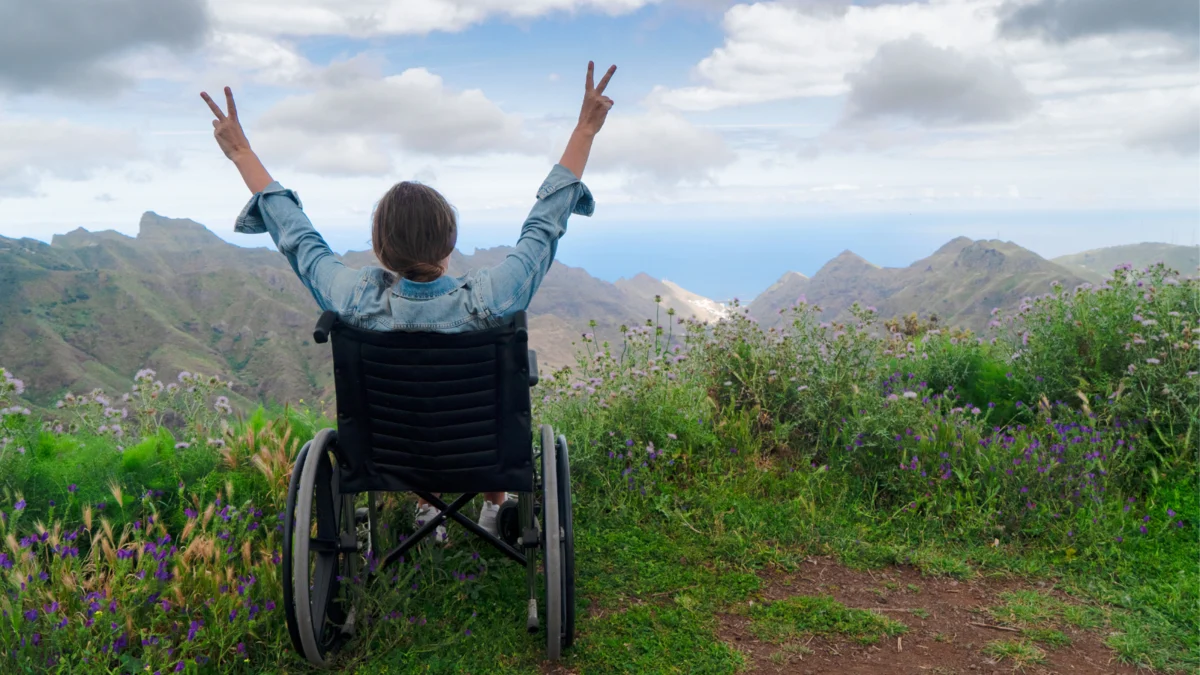

The idea of accessible tourism tends to be shunted off right into a nook every time speak turns to enhancements to services for aviation, cruise, hospitality, and public points of interest. This covers key aspects of accessible tourism business case.
To cite Malaysian accessibility advocate Beatrice Leong: “The factor about accessibility is that the second you discuss individuals with disabilities and accessibility, the very first thing you consider is a wheelchair and a ramp. However I am attempting to zero in on the truth that it’s greater than that.”
The very root of the phrase itself is entry, primarily a way of coming into a spot, gaining maintain of an merchandise or data, or the license to carry out sure actions.
For these hampered by the bodily affect of age, sickness, and damage, in addition to those that had been born with brains in a different way wired from the bulk, accessibility to the devices of standard dwelling is a each day battle, and journey much more so.
On this characteristic, we at Journey Each day Media take a more in-depth have a look at accessible tourism and the way world journey professionals could make issues simpler for many who want numerous types of help.
First issues first: what precisely is accessible tourism?
The worldwide analysis agency EBSCO defines accessible tourism as such:
“Accessible tourism is an method to journey that ensures lodging and experiences can be found to people of all talents, together with these with disabilities, seniors, and households with younger youngsters. This idea encompasses a variety of accessibility options, reminiscent of wheelchair-friendly lodging, transportation choices, and venues geared up with Braille signage or audio descriptions to help visually impaired travellers. The tourism business is more and more recognizing accessibility not simply as a requirement, however as a beneficial alternative to have interaction a broader viewers.”
This definition definitely concurs with Leong’s assertion that accessibility includes only a wheelchair and a ramp, seeing the way it permits for signage for the visually impaired and transportation choices for disabilities of any stripe.
Likewise, of their research A Whole of Life Approach to Tourism: The Case for Accessible Tourism Experiences for Cambridge College, consultants Simon Darcy and Tracey J Dickson pointedly state: “Accessible tourism permits folks with entry necessities, together with mobility, imaginative and prescient, listening to and cognitive dimensions of entry, to perform independently and with fairness and dignity by means of the supply of universally designed tourism merchandise, companies, and environments.”
Their definition contains infants properly beneath the strolling stage, in addition to senior people in lower than ultimate well being.
It must also be acknowledged there that accessible tourism must cowl three dimensions of accessibility; particularly bodily entry, sensory entry, and communication entry. This covers key aspects of accessible tourism business case.
To elaborate additional, related measures want to incorporate:
- Bodily entry for these with bodily disabilities that require wheelchairs, strolling aids, or handrails;
- Sensory entry for many who have sight or listening to impairments; and
- Communication entry for many who have impairments involving speech, imaginative and prescient, and listening to.
Providing calm rooms and different soothing measures for people on the autism spectrum or who’ve been recognized as having one type of neurodivergence or one other can also be one thing that journey and tourism professionals have to look into.
It’s not that straightforward
Regardless of the necessity for these inclusions to be in place, together with authorities mandates the world over relating to the consolation and security of the disabled, it’s a unhappy reality that many nations have but to implement related measures or battle to position even the barest minimal.
Certainly, it has been famous that there are 5 key obstacles to the right administration of measures associated to accessible tourism.
These are:
- Longstanding misconceptions and prejudices relating to incapacity are inclined to result in weaker laws and the absence of implementation Whether or not we prefer it or not, a lot of the world’s inhabitants has but to (or probably refuses to) shake off the notion that the disabled are little greater than an annoyance or, worse, a burden to the remainder of able-bodied society. Likewise, lawmakers who share that prejudiced mindset see measures for accessibility as both pointless or impractical as a consequence of “low demand,” and are fast to veto any associated proposals for such measures in airports and seaports;
- Accessible tourism continues to be perceived as a dangerous funding For essentially the most half, companies the world over balk at the price of accessibility upgrades, marking them as too excessive and both late to ship returns on funding or are unprofitable all collectively. This mindset is extra widespread in nations inside the creating world;
- Stakeholders by no means appear to see the massive image In circumstances whereby the private and non-private sectors do conform to implement accessibility measures, they figuratively come to blows as to which actual measures to place in place. Progress relating to the implementation of key measures is commonly hampered by an absence of center floor amongst stakeholders;
- Those that are speculated to be in cost lack coaching Admittedly, the human assets aspect of worldwide journey and tourism has by no means fairly recovered from the affect of the pandemic, as there’s nonetheless a staffing shortfall of as much as 52 p.c all through the business. That stated, it has been a problem discovering people to deal with services associated to accessible tourism as a consequence of their lack of {qualifications} in addition to the related coaching for coping with these in bodily or psychological issue; and
- There stays a significant disconnect relating to infrastructure and design Regardless of the perfect efforts of city planners and designers, bodily obstacles stay in transportation hubs, lodging, in addition to points of interest. The idea of defective infrastructure even applies to web sites or reserving techniques that show difficult to make use of for each common folks and people with disabilities.
Now what?
As daunting because the state of affairs could also be, implementing measures associated to accessible tourism might begin small and finally develop due to sustained motion on the a part of governments or, extra doubtless, the personal sector by the use of cause-oriented organisations.
For this, we provide the next potential options for consideration:
- Maximise using modern and revolutionary applied sciences Japan is already on the forefront right here, due to using robotics-enabled mobility options that make journey simpler, extra comfy, and positively enjoyable for these with issue getting round. Haptic touchscreens may be thought of as signage for the visually-impaired, primarily providing a substitute for typical Braille boards;
- Contain stakeholders within the planning and growth part One main mistake we’ve seen amongst city planners, transportation firms, and even governments is that the disabled by no means appear to be concerned within the growth of associated measures. It might be finest if these organisers introduced in certified consultants and even advocates talking for the disabled into the planning course of so as to correctly see what the sector actually wants versus, say, one more ineffective ramp; and
- Change the mindset, change the sport The most important drawback I’ve encountered, significantly as somebody whose mobility is compromised by poor imaginative and prescient and weak joints, is that individuals would quite mock than perceive the difficulties others need to undergo, particularly when travelling. Making folks conscious of disabilities in an goal method that allows them to see the disabled as actual folks quite than objects of pity will go a great distance in guaranteeing better acceptance of accessibility measures.
I daresay that the conclusion to the research What is stopping the process? Analysis of obstacles to accessible tourism from a stakeholders’ perspective authored by Lucía Rubio-Escuderos, Francisco Javier Ullán de la Rosa, and Hugo García-Andreu in 2024 is one of the simplest ways to sum the matter up:
“Selling accessible administration of vacationer locations just isn’t solely essential for the inclusion of individuals with disabilities but in addition renders these locations simple and understandable for all people, significantly contemplating the inevitable growing old of the worldwide inhabitants. Understanding the obstacles to accessible tourism permits stakeholders to focus their actions in creating methods to beat them.”